
Beyond Star Wars
What we can learn about warfare from science fiction

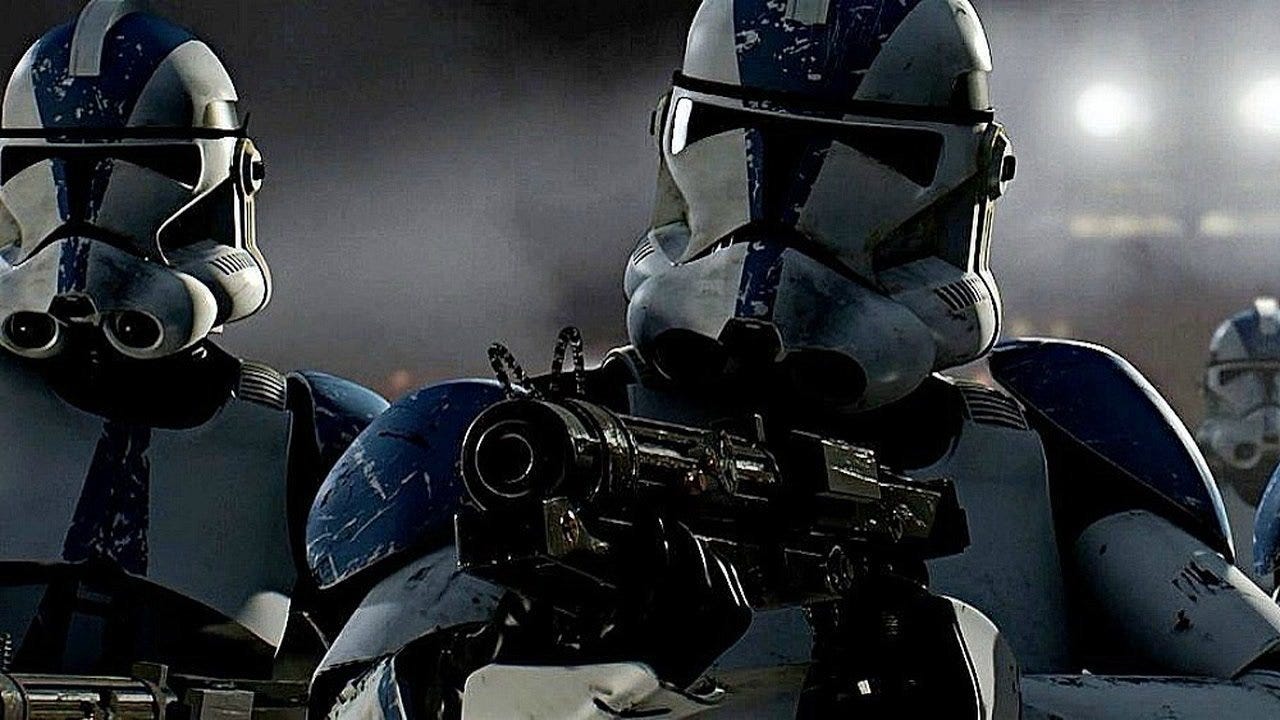
“Imagination is more important than knowledge” – Albert Einstein
The best predictor of creativity is openness to new experiences.[1] Are you open for a post that is somewhat different than what I usually write about?
Most of the times I write about topics that are beyond the usual military science or art, but nonetheless about science. This time is will be about science that is still fiction: sci-fi. In this post I will discuss warfare and technology as displayed in sci-fi movies like Starwars and Dune, with the goal of providing a different perspective. Different perspectives are an important ingredient for creativity, and thus problem-solving. That is also the reason why it helps to have cognitive diverse teams solving problems, as I’ve written before in this post. Mick Ryan wrote a great post on Star Wars some time ago, saying: “While films (and books) cannot provide every solution to future challenges, they do provide a useful complement to the study of military history, current affairs, and technological developments for the modern military professional[2].” I couldn’t agree more.
Star Wars: clones versus droids
In the first three episodes of Star Wars, a galactic war is being fought by the Galactic Republic against the Confederacy of Independent Systems, also called the Separatists.[3] The Separatist systems comprise many planets and species that pride themselves in producing droids and technology. Hence, their army consists of machines and droids. The Galactic Republic on the other hand, built a clone army of human soldiers with the help of a species that is specialized in cloning and genetic engineering. When you are not familiar with the movies, imagine an army that consists of millions of clones of just one person. One that is selected for being an exemplar warrior. The growth of the clones needed to be accelerated, their live-spans therefore shorter, but their production rate higher. They still need to learn and train, but these are all standardized for the most part. Specific types of clones, such as the commandos, are better trained and have learned to deviate from standard training.
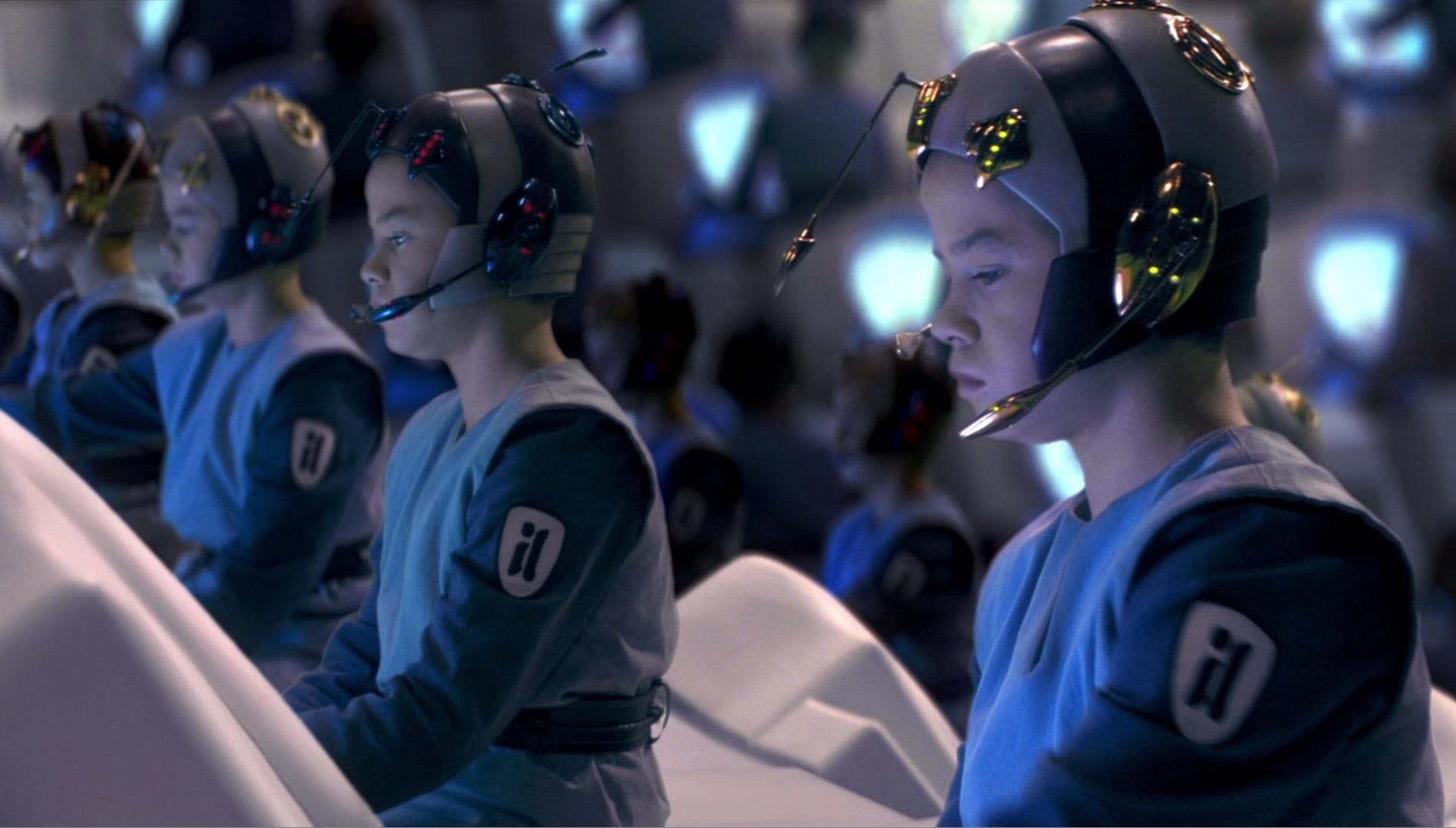
There are many books within the Star Wars expanded universe that dive into the world of these clones, bringing to light many interesting advantages, disadvantages and dilemmas. For example, one of the advantages is that all of these clones follow orders perfectly (not the commandos though, they have been trained to think more for themselves). The medical stations are optimized for ‘repairing’ these clones efficiently. They have spare organs and blood that fit every soldier, since there is little genetic deviation. Yet, there is at the same time political outrage by some, because these clones are not seen as equal citizens and merely as a product. There are even some books that elaborate on the lives of clones after they exit service, and how they have to deal with this in everyday live. You just simply can’t store them somewhere like equipment.
This is different with the droid army of the Separatists. These are highly centralized armies that focus on mass, not quality necessarily. Somehow, a large part of these armies are controlled centrally from a mothership, making them very vulnerable, which of course is being exploited by the good guys in the movie. Destroy the central processor and most of the droids shut down. It is unclear whether this is scripted because of the necessary good and quick ending of the movie. However, in contemporary discussions on autonomous systems there is much discussion on the necessity of a ‘human in the loop’. We are not talking about some loitering munition in a specific engagement area, but thousands of droids. These droid armies occupy entire planets and for example also enforce security measures on the local sentient inhabitants. Do you want to be able to redirect or shut down your army when necessary? Perhaps some form of centralized command is not such a bad idea.
There are some clear similarities between both the clones and droids. Apparently, in this galaxy, nobody is keen on fighting themselves. Not coincidentally, this is a trend we are experiencing as of this day in the real world. More and more armies have ambitions to make first contact something that is being executed by unmanned systems primarily, or want to increase the overall number of these systems significantly.[4] [5] The current debate is also about which roles and tasks should be delegated to robots and which to humans.
I don’t think it is likely that we will be heading towards clone armies, since this will likely lead to severe ethical objections. But who is to tell that China won’t? They do not seem to have a lack of manpower right now, yet genetically upgrading your current soldiers might be something that is on the table in the future. Moreover, the more there is at stake, the more slippery these ethical slopes become. What if our adversary increases the fitness of all their potential recruits by say, 20%? The inconvenient truth is that in the West, most of our potential recruits aren’t that fit at all.[6] [7]
The other possibility is to have robots do the fighting. Nobody is morning them, and they can be created as long as there are resources available. What we intuitively assume, and what is also being displayed in Star Wars, is that these droids are less adaptive and intelligent than humans.[8] The human Republic clones and the Jedi Generals leading them are naturally the good guys. Note that the role of Generals are always occupied by the superhuman Jedi, the clones mostly occupy junior leadership roles. The question is whether in the real world these robots are actually inferior to human soldiers, especially since AI is making huge strides and quantum computing is set to break many technical boundaries we can’t even imagine. The overall point of the Clone Wars is, can we truly outsource war to machines or clones? Is this something we ought to achieve? Are willing to lay the future of our countries and our family in the hands of machines entirely? Likely not, but perhaps this will change in the future.
Last, I would want to question the adaptability of both the clone and droid army. The clones receive the same training and are all literally the same individuals. No discussion on nature versus nurture there. The droids are in a certain sense the same as the clones. They are identical systems with identical programming and algorithms. Only their individual capacity for learning makes them unique and therefore less predictable. Because this is the largest weakness both droids and clones have in this respect, they are to some degree predictable and likely less creative, since they all have the same repertoire of reference frames or data. The droids possibly have one advantage, they can theoretically share their lessons via a simple update. When one droid discovers an enemy weakness, others can potentially use this knowledge almost instantly. This argument would also vouch for some centralized command and control, or at least data-link.
What if we choose not to use AI in warfare?
When thinking about future weapons, you probably wouldn’t think about the books (or movie) of Dune by Frank Herbert at first, but there are some interesting elements in this wonderful story. The stories of Dune take place in the future of our own galaxy, where humanity fought an existential battle against machines that became intelligent, as in AI.[9] After this war, humans vowed never to use intelligent machines anymore, which is why they rely on simpler weapons operated by humans. The use of intelligent machines has since been forbidden and the fear of these weapons is so severe, that few dare to use it. This might seem far-fetched, but in fact we have already experienced something similar during World War I when we employed chemical weapons for the first time. Since then, several treaties have been signed which prohibit the use of chemical weapons. More important, in more than a hundred years only a few countries have dared to use chemical weapons, and when they did, they were severely condemned for it.
There is currently no shortage on books that warn of the dangers of AI, but the overall trend in military spheres is that AI is the future. But what if we unleash the true power of AI on the battlefield? Are we able to predict the consequences of these weapons? For more on this topic, I can recommend reading the book Nexus by Yuval Harari.
Will lasers be the end or the beginning of close combat?
I can’t write about war in sci-fi without mentioning laser weapons. Many sci-fi movies have laser weapons, and the concept always seemed to be very futuristic, but not anymore. Ukraine is already employing them on a small scale in the current war with Russia, and many countries are rushing to get these weapons to shoot down drones. You can read more about the current state of these weapons on Laser Wars by Jared Keller, here on Substack. The potential of a laser weapons can be huge. For starters, the speed is that of light and therefore almost impossible to counter when fired at you. This is not what you see in many movies though, but that has likely more to do with cinematics than physics. One of the few movies that has a somewhat more accurate depiction of laser weapons is Dune, where these lasers are almost instant instead of the slow lasers of Star Wars and the like. Another advantage can be the range of lasers, depending on the weather and the energy invested. In theory, these weapons can become a severe threat not only to drones, but also planes flying at higher altitudes. Higher energy rates can possibly also penetrate armoured vehicles and certainly damage personnel.
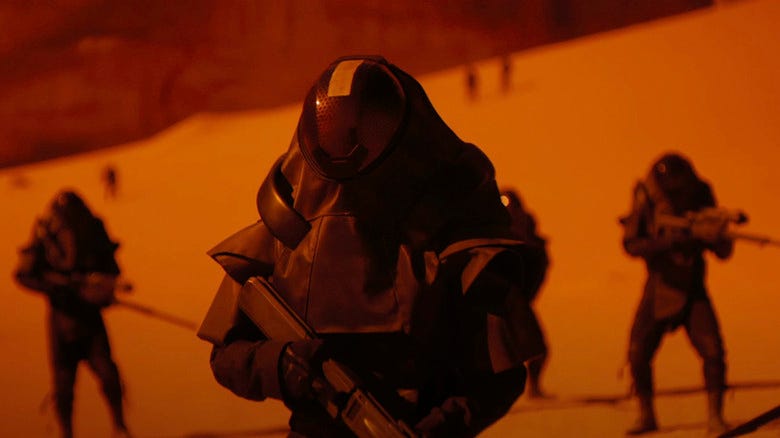
The movie Dune also depicts an interesting counter measure against laser weapons. They have created shields that when hit by a laser, overload the weapon, destroying it and its user. In the Dune universe this physical property is called the Holtzman effect, which is of course all bullocks.[10] But one can imagine a shield that functions like a mirror which reflects the light back at its originator. This would make the use of the weapons very risky for you don’t always know if your adversary has a shield or not. These shields not only protect against lasers but also against fast moving objects like projectiles. The result is that as long as everybody is equipped with these shields, they are forced to fight at close range with swords in order to penetrate these shields. I suspect this is merely a brilliant move to create cinema with fanciful and very personal fighting scenes. Imagine an action movie where most of the actors fire long range lasers, mostly invisible to the naked eye, that instantly vaporize friend and foe alike. That would probably look less spectacular. All in all, unless the shields of Dune can somehow become reality, I expect that these weapons will only increase the range of our weapons.
What is missing?
What are we not seeing in these sci-fi movies or books? Most of what we see is warfare as we know it, but then with new technology or in new domains such as space. Yet even in space we see spacecraft engaging each other in dog fights or spaceship batteries firing at close range, as if these battles were taking place at sea two hundred years ago. Even nowadays, much of warfare at sea takes place beyond the line of sight. My point is, the fiction is primarily focussed on technology whereas the way we fight or think apparently changed little. [If I am missing some great sci-fi story that actually does provide this angle, please tell me in the comments] Of course, this might again have to do with capturing your audience with a story that is recognizable. But the real question is this: why is it so difficult to be creative when it comes to how we fight, independent of technology? Is it because all available options have already been explored and we are thus limited to only outsmarting the enemy with new weapons or technology? Is this the nature of war, and does the character of war only change when technology changes? Or are we not creative enough, or limited, in our thinking of new ways how to fight?
“Creativity is seeing what everyone else has seen, and thinking what no one else has thought” – Albert Einstein
Thank you for reading! As of now, there will only be free-subscriptions to Beyond the Art of War. If you do want to make a contribution, you’re welcome to buy me a coffee!
The views expressed are those of the author and do not reflect the official position of the Armed Forces.
[1] https://www.apa.org/monitor/2022/04/cover-science-creativity
[2] https://substack.com/@mickryan/p-152428180
[3] https://Star Wars .fandom.com/wiki/Clone_Wars
[4] https://www.nationaldefensemagazine.org/articles/2023/10/9/ausa-news-army-envisions-robots-taking-first-blood-in-conflicts
[5] https://www.gov.uk/government/publications/the-strategic-defence-review-2025-making-britain-safer-secure-at-home-strong-abroad
[6] https://www.cdc.gov/physical-activity/php/military-readiness/unfit-to-serve.html
[7] https://today.citadel.edu/citadel-led-study-reveals-threat-to-u-s-military-readiness-due-to-unfit-recruits/
[8] https://screenrant.com/star-wars-republic-use-clones-not-droids/
[9] https://en.wikipedia.org/wiki/Dune:_The_Butlerian_Jihad
[10] https://dune.fandom.com/wiki/Holtzman_Effect
Images:
The expanse does a good job.
I've read a lot of the writings that focus on 'lessons' learned from SciFi books etc. - but don't lose sight of the reality that everything in those worlds reflects human experience of this world plus the imagination of the author/creator.